|
|
|
|
| | Notes and References : |
| | 1 ] |
Keith Thomas, Religion and the Decline of Magic, (Charles Scribner's Sons, New York, 1971), William Lilly, Christian Astrology: Modestly Treated of in three Books, (Regulus, London, 1985); Bernard Capp, English Almanacs 1500-1800, (Cornell University Press, Ithaca, 1979) p. 57; Derek Parker, Familiar to All: William Lilly and Astrology in the Seventeenth Century, (Jonathan Cape, London, 1975) p. 127; Geoffrey Cornelius, The Moment of Astrology: Origins in Divination, (The Wessex Astrologer, Bournemouth, 2003); Ann Geneva, Astrology and the Seventeenth Century Mind, (Manchester University Press, Manchester, 1995); Patrick Curry, Prophecy and Power: Astrology in Early Modern England, (Polity Press, Cambridge, 1989) p. 31.
(Back to text)
|
|
| | 2 ] |
Christian Astrology: Retyped and Annotated by Deborah Houlding, (Ascella, London, 1999 and 2001); John Frawley, (Ed.) The Astrologer's Apprentice, (London, 1999-2007); Nick Campion, A History of Western Astrology, Volume II: The Medieval and Modern Worlds, (Continuum, London, 2009) p. 151.
(Back to text)
| |
| | 3 ] |
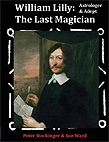
The Last Magician, back cover description.
(Back to text)
| |
| | 4 ] |
See Nick Campion, "The Traditional Revival in Modern Astrology: A Preliminary History", Astrology Quarterly, (Winter 2003) pp. 28-38, and Deborah Houlding's "Prediction, Providence & the Power of the 'Self' in Horary", on Skyscript, but originally published in a shorter form in The Traditional Astrologer magazine, Issue 17, Sept. 1998.
(Back to text)
|
|
| | 5 ] |
Ibid., p. 257.
(Back to text)
| |
| | 6 ] |
A Brief History of Britain: 1485-1660, (Constable & Robinson, London, 2008).
(Back to text)
| |
| | 7 ] |
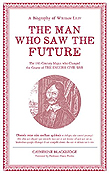
Author quote is taken from the front paper of The Man Who Saw the Future.
(Back to text)
| |
| | 8 ] |
Geneva, op. cit. p. xiv.
(Back to text)
| |
| | 9 ] |
Ibid., pp. 2 and 10.
(Back to text)
|
|
| | 10 ] |
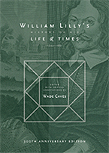
Life and Times, (Rubedo Press, Auckland, Seattle, 2015) p. 62. I have used their version, since it has the most straightforward orthography. Other editions seem to randomly capitalize certain words and add extra letters.
(Back to text)
| |
| | 11 ] |
Lilly's mastery of astrology may also be attributed, at least in part to hard study; in his autobiography, he admitted to studying "those bookes I had obtained, many tymes 12 or 15 or 18 houres day and night." The Last Magician, p. 58.
(Back to text)
|
|
| | 12 ] |
Perhaps not such a stretch: Lilly references one of Fludd's works in the extensive bibliography of his Christian Astrology, where he states that he "hath wrote much Astrology, he may justly be accounted the mirrour of our times."
(Back to text)
| |
| | 13 ] |
The Last Magician, op. cit. p. 87.
(Back to text)
| |
| | 14 ] |
Ibid. p. 124 and 126.
(Back to text)
|
|
| | 15 ] |
Richard Cavendish, A History of Magic, (Arkana/Penguin, London, 1987) p. 67.
(Back to text)
| |
| | 16 ] |
Richard Kieckhefer, Magic in the Middle Ages, (Cambridge University Press, Cambridge, 1989) p. 12.
(Back to text)
| |
| | 17 ] |
Ibid. p. 38; Daimones or daemons, as guiding spirits, may be traced to Alexandria in the second century BCE. See Dorian Gieseler Greenbaum's "Calculating the Lots of Fortune and Daemon in Hellenistic Astrology", Culture and Cosmos, Vol. 11 no 1 and 2, pp. 163-187. The reintroduction of daemons in contemporary astrology may be traced to Geoffrey Cornelius in his Moment of Astrology: Origins in Divination, (The Wessex Astrologer, Bournemouth, 2003; originally published by Arkana/Penguin, London, 1994). See pp. 178-9 for his description of their role.
(Back to text)
| |
| | 18 ] |
The Last Magician, op. cit. p. 298.
(Back to text)
| |
| | 19 ] |
Ashmole had assisted Lilly with the preparation of Christian Astrology the previous fall and would have been aware of the extensive number of books on hermetic magic and Islamic astrology Lilly owned, making this an ideal gift. CA's bibliography makes this apparent. As regards his book burning, after a recounting of various magical practices with his clients, Lilly states "but I grew weary of such imployments, and have since burned my books, which instructed those Curiousitys" (Stockinger and Ward, p. 67).
(Back to text)
|
|
| | 20 ] |
Lilly's "Life and Times" was not published until 1715. No doubt, things heated up between the two men after Gadbury was stung by remarks Lilly had made about the bad side of Scorpio, his rising sign. Gadbury responded with a book Obsequium Rationabile attacking Lilly. Lilly's defense was mostly carried on by his partisans in a series of broadsides and tracts. See James Herschel Holden's Biographical Dictionary of Western Astrologers (AFA, Tempe, 2012) for a summary and a fairly positive biographical sketch of this unhappy man.
(Back to text)
| |
| | 21 ] |
Curry Prophecy and Power, Op. cit. pp. 38-9.
(Back to text)
| |
| | 22 ] |
The lagging footnote is # 399. The missing footnote, # 145 appears on p. 85; the duplicates are # 59 and # 143; and the one with missing text is # 190 on p. 103.
(Back to text)
| |
| | 23 ] |
The Last of the Astrologers, Edited by Katherine Briggs (The Folklore Society, London, 1974); curiously, this version of Lilly's "Life and Times" is omitted from Philip Graves' otherwise fine survey contained in the book's preface. Brigg's annotations are excellent for people and places, but less helpful for astrological terms. It speaks volumes about the state of astrological literature of the 1970's, that the only version of Christian Astrology in her short bibliography is Zadkill (sic)'s bowdlerized edition, strangely from Bohn Library (1875).
(Back to text)
| |
| | 24 ] |
I still recall being astonished when Astrology Today, the precursor to Mountain Astrologer dedicated a whole issue to horary in their April/May 1977 issue. Nothing in the issue suggests a revival was at hand. As to horary astrology's presence in the early 19th century, see Philip Graves' DVD From Sibly to Simmonite: Source Texts of the 19th century English astrological revival 1784-1854, and my review of it highlighting horary on this website.
(Back to text)
| |
| | 25 ] |
See Barbara Howard Traister's The Notorious Astrological Physician of London: Works and Days of Simon Forman, (University of Chicago Press, Chicago, 2001) for an interesting study; naturally, as an academic she is hostile to astrology, but it contains much helpful information.
(Back to text)
| |
|
|
|